Why do some people prefer a notebook-style app over a plain grid calendar?
By PlanJour team, Sparklithic Ltd · Published · Updated
A plain grid calendar and a notebook-style one hold the same information, but they feel very different to use. Here's why the format itself matters.
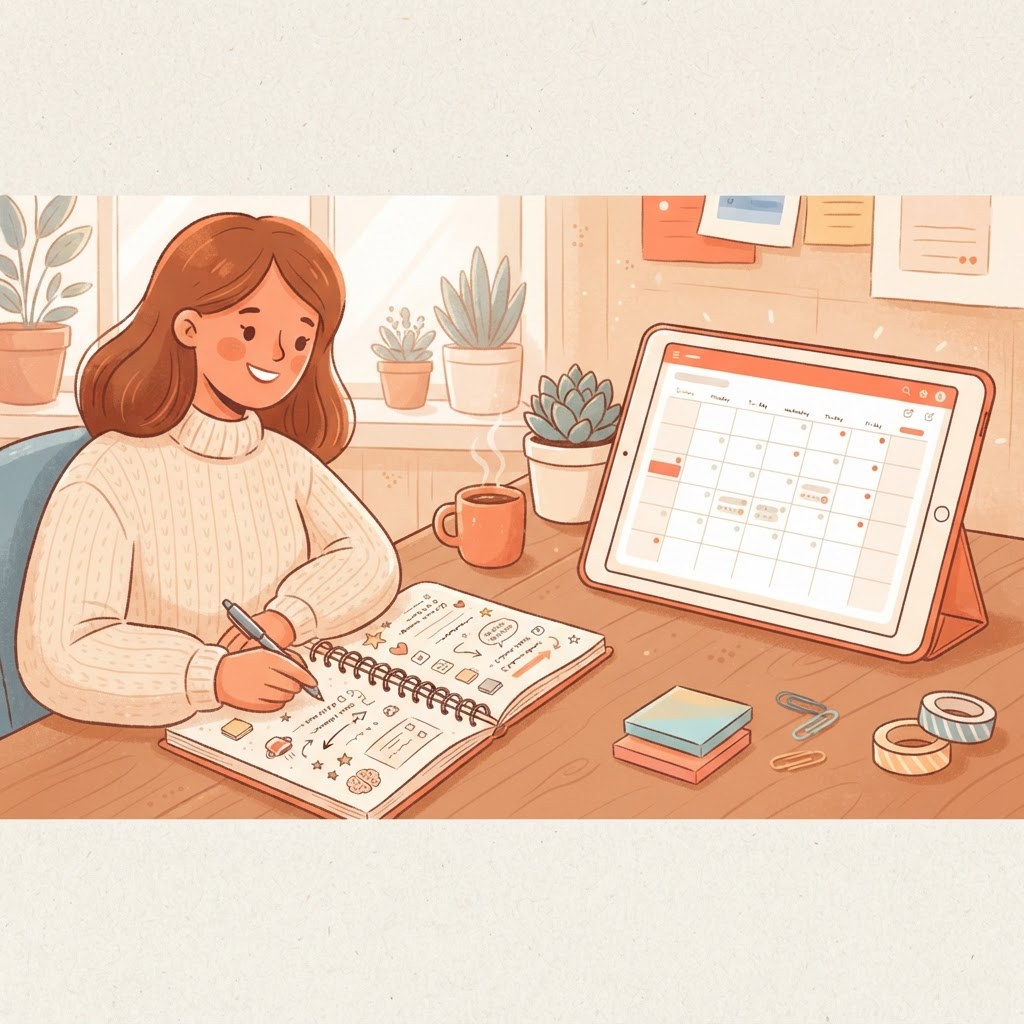
Functionally, a plain grid calendar and a notebook-style one can hold identical information, the same events, the same times. But plenty of people have a strong preference for the notebook-style version, and it's worth understanding why the format itself, not just the data, matters to people.
A plain grid treats every week as identical
A standard grey calendar grid looks the same regardless of what's actually happening in your life, a slow week and a hectic one are rendered in the exact same visual template. That neutrality is efficient, but it also means the calendar carries no personality, no sense that this particular week was yours.
A notebook-style layout invites personalization
Stickers, shapes, color choices, a paper-like texture, these let a week visibly reflect what actually happened or how you feel about it, the same way a physical planner or bullet journal does. That sense of ownership, "this looks like my week, not a generic template," is a real reason people form an attachment to a tool rather than just tolerating it.
It closes some of the emotional gap with paper
A lot of people who love paper planners and struggle with digital ones aren't objecting to digital tools in principle, they're missing the personalization and warmth of paper specifically. A notebook-style digital calendar is an attempt to keep that warmth while gaining digital advantages like reminders, recurring events, and search, rather than forcing a choice between the two.
It can make daily use feel less like a chore
A calendar that feels pleasant to open, because it looks like something you made rather than a spreadsheet, is a small thing, but small things affect whether a habit sticks. If checking your calendar or reflecting in your journal feels warm rather than clinical, you're simply more likely to do it consistently, and consistency is the entire point of any planning system.
It's not strictly necessary, but it's not just decoration either
A plain grid calendar works perfectly well for plenty of people, there's nothing wrong with preferring pure function. But for people who've struggled to stick with digital calendars specifically, the notebook-style preference often isn't superficial, it's addressing a real reason paper worked for them that a generic grid never replicated.