What's the difference between a reminder and an actual calendar event?
By PlanJour team, Sparklithic Ltd · Published · Updated
These two get used interchangeably, but mixing them up is a common cause of missed things and cluttered calendars. Here's the actual distinction.
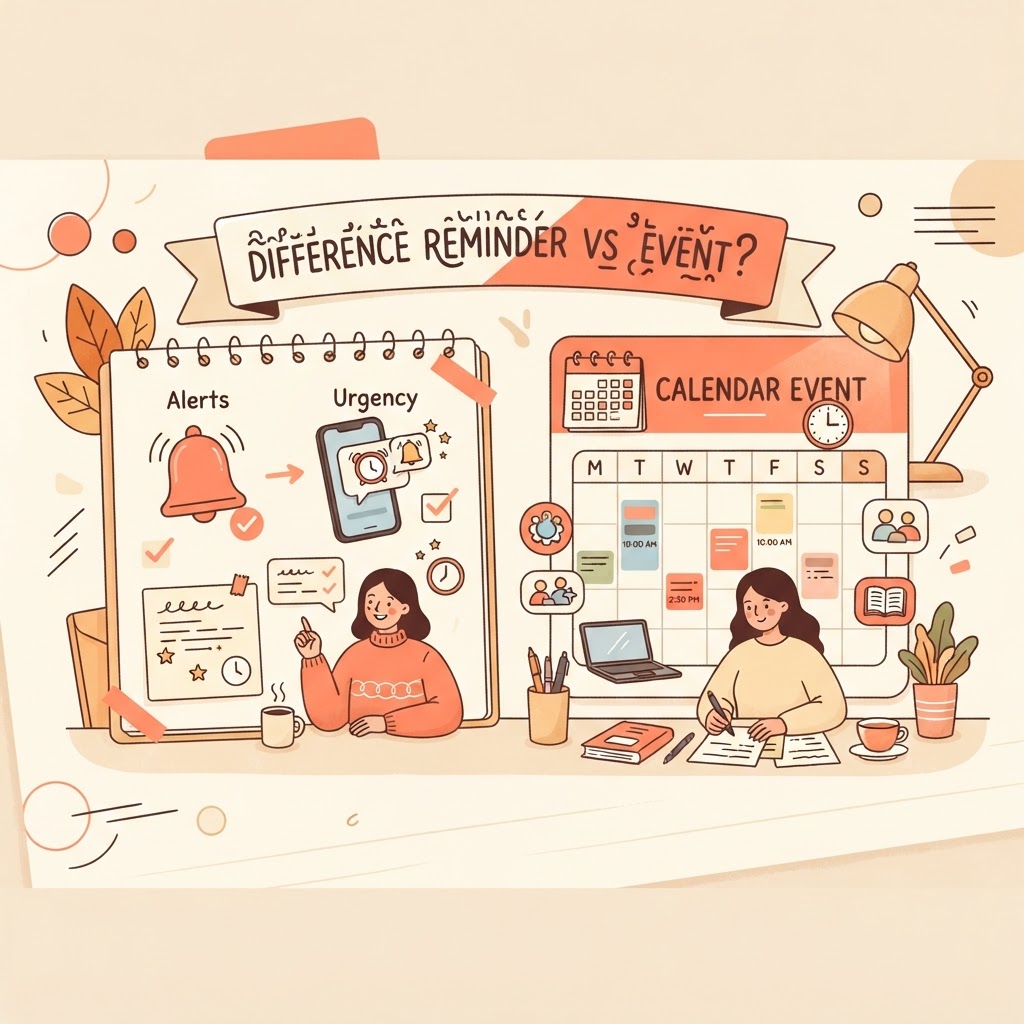
It's an easy distinction to blur, since both show up as notifications, but they serve genuinely different jobs, and using the wrong one for the wrong thing is a common, avoidable source of missed commitments.
An event represents something that takes up time
A calendar event has a start and an end, it occupies a block of your day. A meeting, an appointment, a trip, a workout, these are events because they consume actual time and can conflict with other things scheduled at the same time. The whole point of an event is to reserve that slot so nothing else gets double-booked into it.
A reminder represents a moment, not a duration
A reminder is a point-in-time nudge: pay this bill, call this person back, don't forget to bring something tomorrow. It doesn't take up time on your calendar, and it doesn't need to, because the underlying task itself might only take a minute, or might happen at some point during a broader window rather than a fixed slot.
Why mixing them up causes problems
Turning every reminder into a fake zero-duration "event" clutters a week view with things that don't actually represent blocked time, making it harder to see your real availability at a glance. Going the other direction, using only reminders for things that actually need a time block (an appointment, for instance) risks a real conflict slipping through, since a reminder alone doesn't protect that slot from being double-booked.
A simple rule for choosing
Ask: does this need to occupy a specific block of time that shouldn't be double-booked? If yes, it's an event. Does it just need a nudge at some point, without reserving a duration? If yes, it's a reminder. A dentist appointment is clearly an event. "Remember to renew your passport" is clearly a reminder.
They work best together, not as substitutes
The most reliable setup pairs the two: an event for anything with real duration, plus a reminder attached to it if there's a risk of forgetting to prepare in time (a reminder the day before an early appointment, for instance). Used this way, events protect your time and reminders protect your memory, and neither one is trying to do the other's job.