How do I set up PlanJour so my whole family can see one shared calendar?
By PlanJour team, Sparklithic Ltd · Published · Updated
A step-by-step look at setting up whole-calendar sharing in PlanJour for a family, and the practical choices worth making along the way.
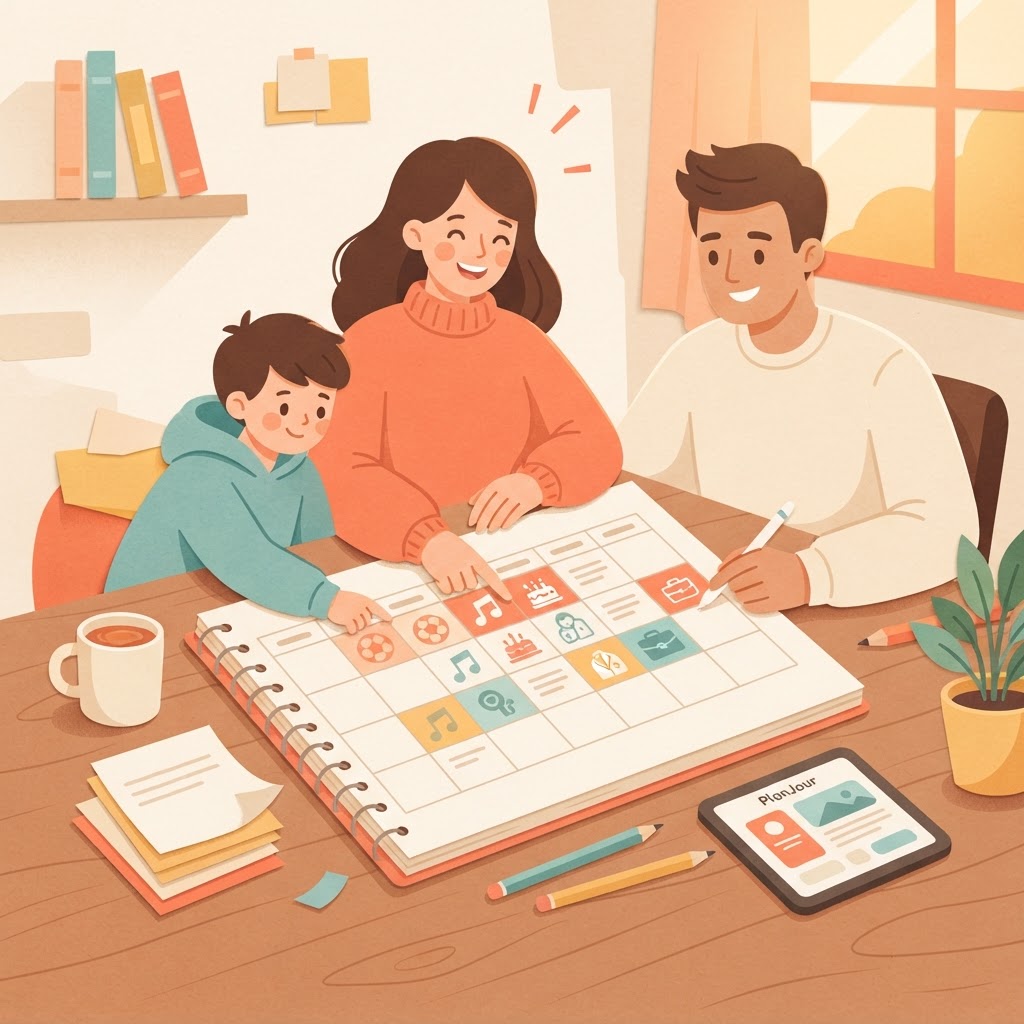
Setting up a shared family calendar in PlanJour is straightforward technically, the more important decisions are around what you actually share and how you keep it usable once more than one person is looking at it.
Start with whole-calendar sharing, which is a Plus feature
PlanJour's whole-calendar sharing lets an account holder share their calendar with another account, so both of you see the same events without manually re-entering anything twice. This is the feature to set up first, from your account settings, sharing with the email of whoever else needs visibility.
Decide who "owns" the shared calendar, at least loosely
Even with sharing enabled, it helps to informally agree who's responsible for adding what, one parent might own school and kids' logistics, another might own their own work-adjacent personal commitments. This isn't a technical setting, it's a household agreement that prevents the shared calendar from silently becoming one person's sole responsibility.
Use a distinct color per family member
Once multiple people are contributing to one shared view, a personal color per family member (rather than by category) is usually the most useful system, letting anyone glance at the week and immediately see whose event is whose, which matters more for a family calendar than the work/personal/health categories that suit an individual's own calendar.
Agree on what goes on the shared calendar versus what stays personal
Not every family member's entire schedule needs to be visible to everyone. It's worth deciding together what belongs on the shared view, school events, family plans, shared logistics, versus what can reasonably stay on an individual's own private view, someone's personal work meetings, for instance.
Revisit the setup as the family's needs change
What works when kids are young (parents managing everything) looks different as they get older and start managing more of their own schedules. It's worth an occasional check-in on whether the sharing setup still reflects how much visibility and involvement actually makes sense at the family's current stage.
Once it's set up, the actual day-to-day payoff is simple: everyone checks one place, rather than school logistics living in one parent's head and getting relayed verbally, which is exactly the kind of quiet friction a shared calendar is meant to remove.