The Best Calendar App Isn't Just a Calendar Anymore
The best calendar app for you in 2026 probably isn't the one with the most integrations, it's the one you actually enjoy opening every day.
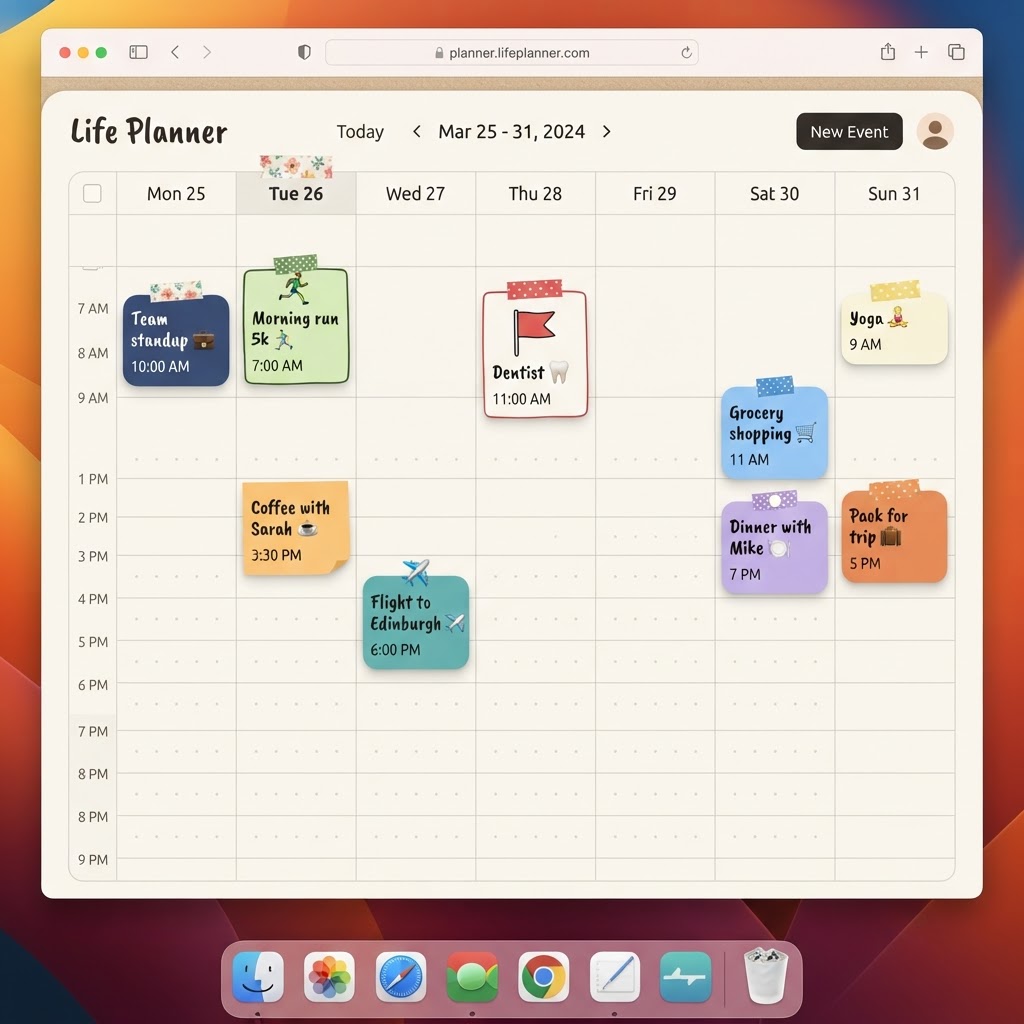
'Best' depends entirely on what you're actually trying to do
Search for the best calendar app and you'll mostly get lists ranked by feature count: integrations, third-party sync options, keyboard shortcuts. All useful if you're evaluating software for an engineering team. Much less useful if what you actually want is a tool you'll open every morning without dreading it a little.
What actually makes a calendar good to use daily
A calendar you'll stick with long-term needs to do a few unglamorous things well: let you see your week at a glance, make it easy to tell one kind of event from another, and not feel like a chore to open. Google Calendar and Outlook are perfectly capable pieces of software, and neither was designed with any of that in mind. They were built for scheduling meetings, not for looking at your life.
Where PlanJour takes a different approach
PlanJour is a full calendar underneath, Agenda, Day, Week and Month views, recurring events, reminders by email, drag-and-drop rescheduling, external calendar sync, all of it works exactly as you'd expect from any serious calendar app. What's different is the surface: doodle-style event shapes, stickers, and colour-coded categories that make a glance at your week actually informative instead of a wall of identical grey blocks. Read more about the notebook-style calendar itself.
The part most calendar apps skip entirely
The single biggest difference isn't visual, it's structural: PlanJour has a real daily journal built directly into the same app, pulling your completed events into that day's wins automatically. A calendar tells you what you planned. A calendar with a journal next to it tells you what actually happened, and how it felt.
Free to start, no card required
You don't need to guess whether this approach works for you. The free plan includes the full calendar with stickers, colours and categories, plus seven days of journal history to try the combination properly. Start free and decide for yourself what 'best' means for how you actually plan your days.
Things that might help
Hand-picked by us and relevant to this article. Some are affiliate links, which means we may earn a small commission at no extra cost to you. We never use your journal, mood, habits or calendar to decide what appears here.

Audible
Affiliate linkHear something fascinating with our newest plan. Choose anything you want from our entire collection of 900,000 titles before your plan renews unused monthly selections won’t roll over to the next month.
Start Free 30 Day Trial
Skill Share
Creative Classes Taught by the Best Creative Pros. Stay Inspired Discover trending topics, get quick answers, and find your people.
Find your classKeep reading
- What to Actually Look for in a Daily Journal AppMost journal apps fail for the same reason: they ask you to remember your day from scratch. Here's what actually makes a journal app stick.
- Why a Calendar and Journal App in One Beats Using Two Separate AppsUsing a calendar app and a journal app separately means neither one knows what the other is doing. Here's what changes when they're the same app.
- Aesthetic Planner Apps: Digital Bullet Journaling Without the MessYou loved the look of a bullet journal, without the hand cramp or the redo-the-whole-week when you make a mistake. Here's the digital version.