What's the best way to plan a week when everything feels last-minute?
If every week feels reactive, the fix usually isn't a better to-do list. It's changing when and how you plan. Here's a simple weekly rhythm that holds up.
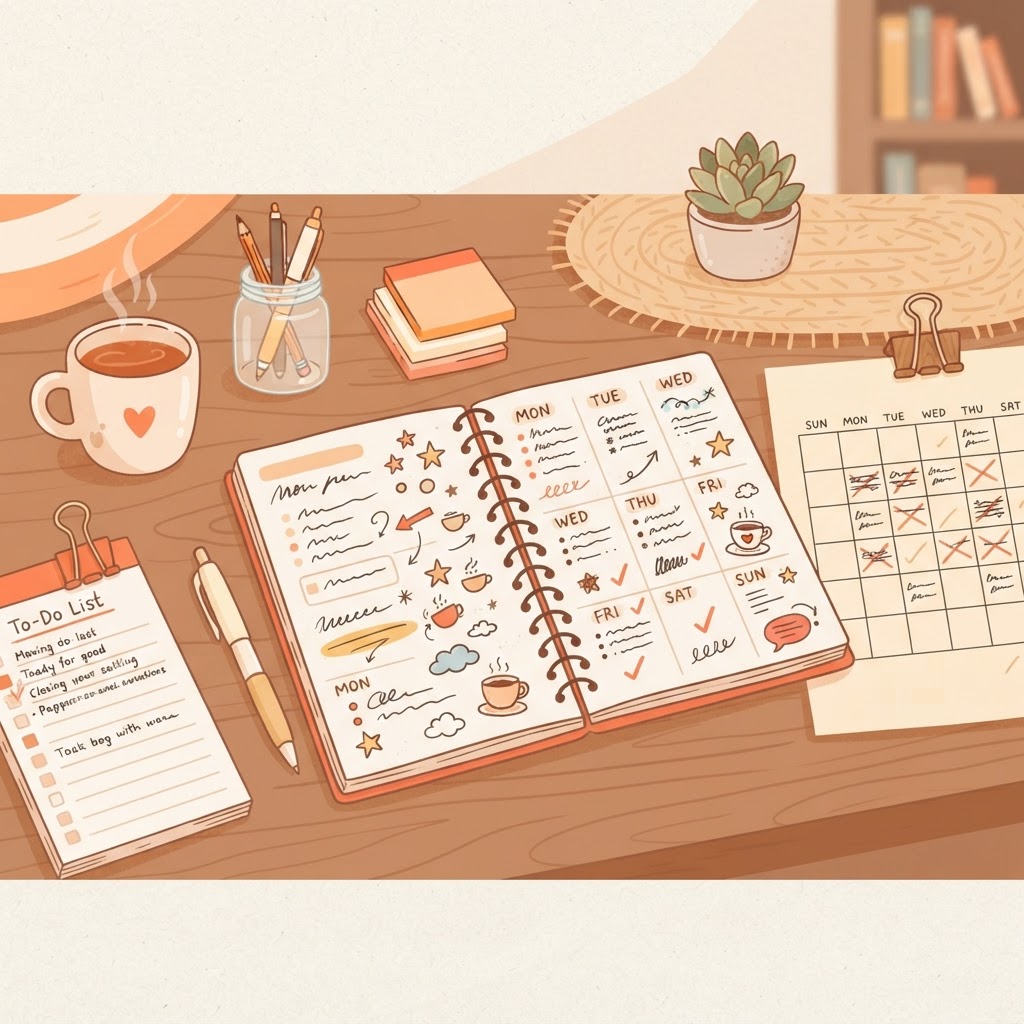
If your week constantly feels last-minute, the issue is rarely that you're disorganized. It's usually that you're planning at the wrong time, in the wrong order, or not writing things down the moment they're agreed.
Plan on a fixed day, not "when you get a chance"
"I'll plan my week when I have time" is how weeks stop getting planned at all, because that time never arrives on its own. Pick one fixed slot, Sunday evening or Monday morning both work well, and treat it as non-negotiable, the same way a meeting would be. Ten minutes is enough for most weeks.
Put fixed commitments in first, not tasks
A common mistake is starting the week by listing everything you want to get done, then trying to fit it around whatever meetings show up later. Reverse it. Put every fixed, immovable thing on the calendar first, work meetings, appointments, recurring commitments, then look at what's actually left. This is the same logic that makes recurring events genuinely useful: if your Tuesday gym session or your weekly team call is already sitting on the calendar automatically, you're planning around real available time instead of an idealized empty week.
Write things down the second they're agreed, not later
Most "last-minute" chaos isn't caused by bad planning, it's caused by a plan made once and then never updated as new commitments come in through the week. If someone asks you to do something on Thursday, put it on the calendar in that conversation, not "when you get home." The gap between agreeing to something and writing it down is exactly where things get forgotten or double-booked.
Keep one list of "floating" tasks, separate from the calendar
Not everything needs a time slot. Tasks with no fixed deadline (tidy the spare room, reply to that email) can sit in a general list you glance at when you have a genuine gap, rather than being forced into specific calendar slots they'll likely get bumped from anyway. Forcing flexible tasks into fixed time slots is a common cause of a calendar that constantly feels "broken" by Wednesday.
Review, don't just plan
A weekly plan degrades over the week as things change. A two-minute check midweek (Wednesday works well) to see what's shifted and adjust catches problems before Friday, when everyone tends to just give up on the original plan entirely.
None of this requires a complicated system. A calendar that shows your fixed commitments clearly, colour categories so you can scan a week at a glance, and a habit of writing things down the moment they're agreed will fix most of what makes a week feel reactive. The last-minute feeling is almost always a timing and capture problem, not a willpower one.
Things that might help
Hand-picked by us and relevant to this article. Some are affiliate links, which means we may earn a small commission at no extra cost to you. We never use your journal, mood, habits or calendar to decide what appears here.

Skill Share
Creative Classes Taught by the Best Creative Pros. Stay Inspired Discover trending topics, get quick answers, and find your people.
Find your class
Audible
Affiliate linkHear something fascinating with our newest plan. Choose anything you want from our entire collection of 900,000 titles before your plan renews unused monthly selections won’t roll over to the next month.
Start Free 30 Day TrialKeep reading
- How do I build a bedtime journaling habit that actually survives busy weeks?Bedtime journaling is one of the first habits to drop during a busy stretch. Here's how to make it durable enough to survive one anyway.
- What's the best calendar color-coding system for someone juggling three roles (work, parent, side project)?Juggling multiple roles on one calendar gets messy fast without a deliberate color system. Here's a simple three-role setup that actually stays legible.
- How do I know if I actually need PlanJour Plus or if the free plan is enough?Not everyone needs to upgrade, and it's worth being honest about when the free plan is genuinely enough. Here's how to tell.