Is it better to journal by hand or type it out?
Both have real, different advantages. Here's an honest comparison rather than a one-size-fits-all answer.
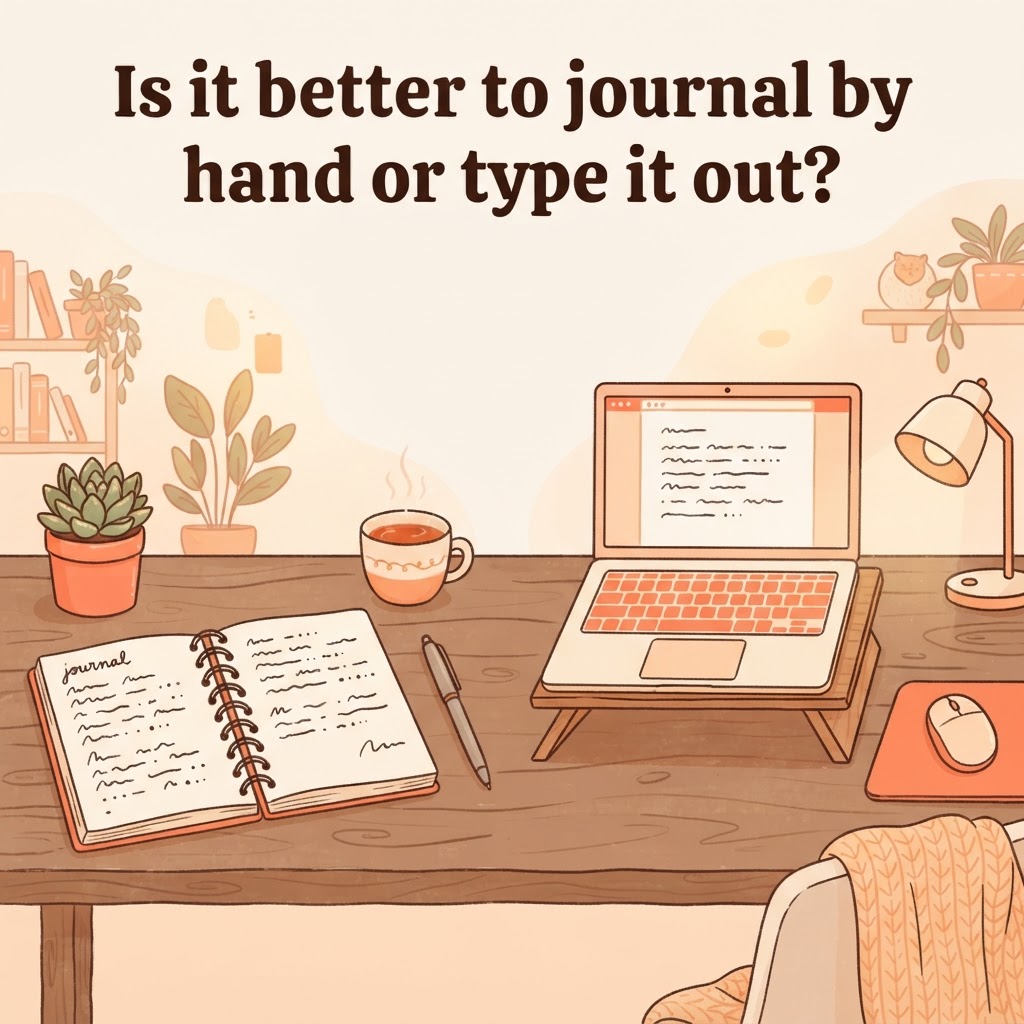
This gets debated a lot, and the honest answer is that both have genuine advantages, the right choice depends on what you actually want out of the habit, not on one method being objectively superior.
The case for handwriting
Writing by hand tends to be slower, and that slowness is sometimes an advantage: it naturally paces your thoughts rather than letting them pour out as fast as you can type, which some people find leads to more considered, reflective entries. There's also a tactile, personal quality to handwriting, your own handwriting on a page feels distinctly yours in a way typed text doesn't, and some people find that alone makes the habit feel more meaningful.
The case for typing
Typing is faster and more accessible for a lot of people, especially anyone who finds handwriting physically uncomfortable or simply thinks faster than they can write. It's also more practical for search, being able to find a specific past entry by keyword is something a digital, typed journal supports easily and a handwritten one doesn't. And for a habit that lives next to a digital calendar, typing keeps the whole system in one consistent place rather than splitting your journal onto paper while your schedule lives on a screen.
Where handwriting genuinely struggles
A handwritten journal is harder to search, easier to lose or damage, and doesn't naturally connect to anything else, like a calendar you're also using digitally. If your goal is a habit that's easy to sustain and easy to look back through later, these are real, practical disadvantages, not just minor inconveniences.
Where typing genuinely struggles
For some people, typing feels less personal, and the ease of typing quickly can result in more surface-level entries, since there's less natural friction slowing down and prompting reflection. If the tactile, considered quality of handwriting is genuinely what makes journaling feel worthwhile to you, forcing yourself to type instead may make the habit feel hollow.
A reasonable way to decide
If you value speed, searchability, and having your journal live alongside your calendar and other planning, typing is the more practical choice for most people building a sustainable daily habit. If the physical act of writing is what makes the habit feel meaningful to you, and you're not relying on searching back through years of entries, handwriting is a perfectly valid choice too. There's no wrong answer, only a mismatch if you pick one that doesn't fit what actually makes the habit worth keeping for you.
Things that might help
Hand-picked by us and relevant to this article. Some are affiliate links, which means we may earn a small commission at no extra cost to you. We never use your journal, mood, habits or calendar to decide what appears here.

Audible
Affiliate linkHear something fascinating with our newest plan. Choose anything you want from our entire collection of 900,000 titles before your plan renews unused monthly selections won’t roll over to the next month.
Start Free 30 Day Trial
Skill Share
Creative Classes Taught by the Best Creative Pros. Stay Inspired Discover trending topics, get quick answers, and find your people.
Find your classKeep reading
- What's a good end-of-week reflection question if I only have two minutes?A weekly review doesn't need to be long to be useful. Here's a single question that works well when two minutes is genuinely all you have.
- How do I stop double-booking myself across work and personal calendars?Running separate work and personal calendars is a common setup, and a common source of double-booking. Here's how to actually prevent it.
- What's the difference between a habit tracker and a streak counter?These terms often get used as if they're the same thing, but a streak counter is really just one narrow feature within a broader habit tracker. Here's the distinction.