How do I share a calendar with my partner without it turning into a mess?
Shared calendars often turn into a source of friction instead of help. Here's what actually makes them work, based on how couples who do it well set theirs up.
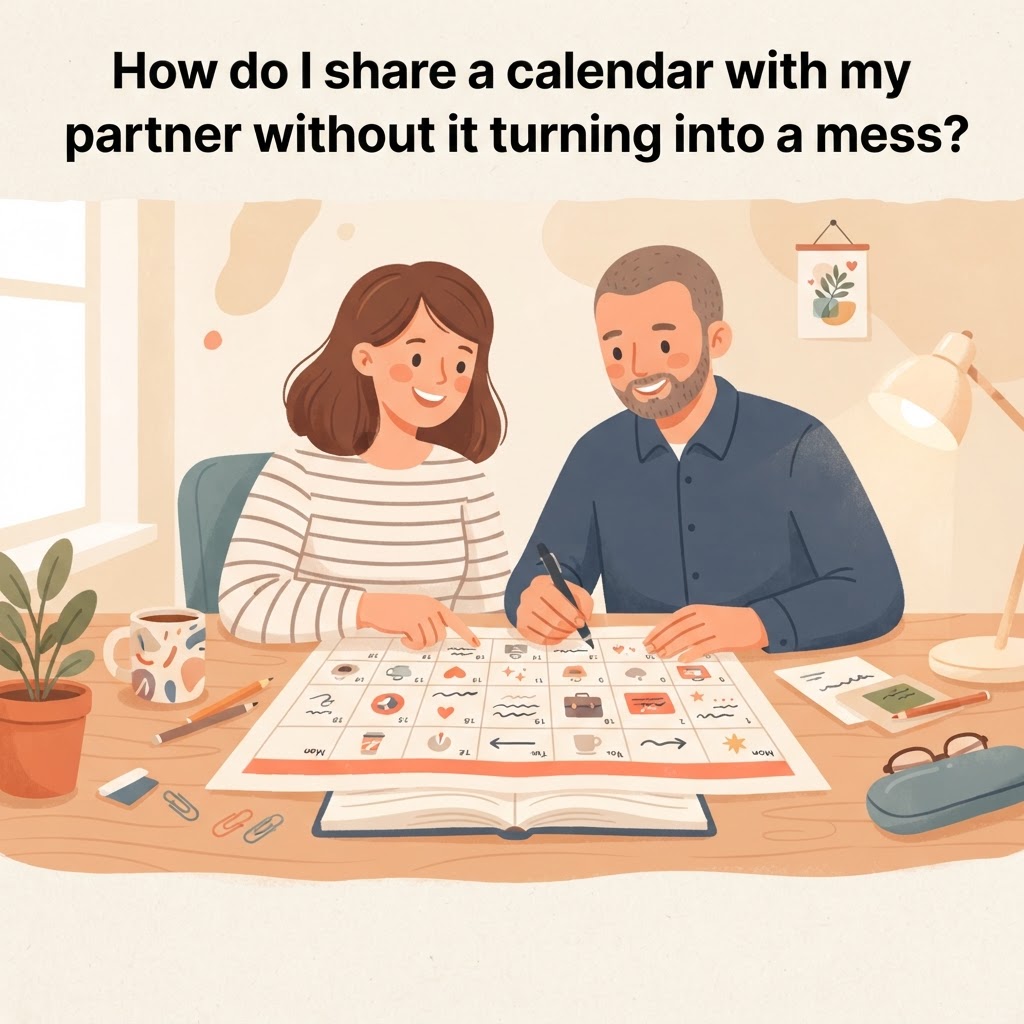
Sharing a calendar sounds simple, but plenty of couples try it, hit friction (missed updates, cluttered views, one person feeling tracked rather than supported), and quietly go back to two separate calendars. The usual cause isn't the idea itself, it's a few avoidable setup mistakes.
Decide what's actually shared, not everything
A full merge of two calendars, every personal appointment, every work meeting, every reminder, tends to create clutter and a low-grade feeling of surveillance. Most couples do better sharing a specific layer: joint commitments (plans together, shared bills, family events) rather than each person's entire schedule. PlanJour's whole-calendar sharing is opt-in for exactly this reason: you choose what the other person sees, rather than an all-or-nothing sync.
Agree on how new commitments get added, before you need to
The most common friction point isn't the calendar itself, it's one person adding something (a dinner, a trip) without the other noticing until it's already a conflict. A simple rule, "anything that involves both of us goes on the shared calendar within the same day it's agreed", removes most of this before it starts. The habit matters more than the tool.
Use consistent categories or colors for shared events
If joint plans, appointments, and reminders all look identical on the shared view, it's genuinely hard to scan at a glance. A simple color convention, one color for joint social plans, another for shared responsibilities like bills or family logistics, makes the shared calendar something you can glance at for ten seconds rather than something you have to read carefully every time.
Don't let a shared calendar replace actual conversation
A calendar entry ("dinner with the Smiths, Saturday") communicates the fact but not the context. Couples who rely entirely on the calendar for coordination sometimes find it becomes a source of "well, it was on the calendar" arguments instead of a source of ease. The calendar should support a quick conversation, not replace it entirely.
Revisit the setup occasionally
What works during a quiet season (two categories, casual updates) might not survive a busier one (a new job, a house move, a baby). It's worth a brief check-in every few months: is this still working, or has it quietly turned into clutter again?
A shared calendar works best as a light layer on top of two people who already communicate, not as a substitute for that communication. Get the boundaries and habits right first, and the tool itself becomes the easy part.
Things that might help
Hand-picked by us and relevant to this article. Some are affiliate links, which means we may earn a small commission at no extra cost to you. We never use your journal, mood, habits or calendar to decide what appears here.
Skill Share
Creative Classes Taught by the Best Creative Pros. Stay Inspired Discover trending topics, get quick answers, and find your people.
Find your class
Audible
Affiliate linkHear something fascinating with our newest plan. Choose anything you want from our entire collection of 900,000 titles before your plan renews unused monthly selections won’t roll over to the next month.
Start Free 30 Day TrialKeep reading
- How do I build a bedtime journaling habit that actually survives busy weeks?Bedtime journaling is one of the first habits to drop during a busy stretch. Here's how to make it durable enough to survive one anyway.
- What's the best calendar color-coding system for someone juggling three roles (work, parent, side project)?Juggling multiple roles on one calendar gets messy fast without a deliberate color system. Here's a simple three-role setup that actually stays legible.
- How do I know if I actually need PlanJour Plus or if the free plan is enough?Not everyone needs to upgrade, and it's worth being honest about when the free plan is genuinely enough. Here's how to tell.