PlanJour vs Day One: Comparing the Two Ways to Journal Digitally
Day One is a well-regarded, journal-only app with a premium AI tier. Here's how it compares to PlanJour, which builds the journal around a real calendar instead.
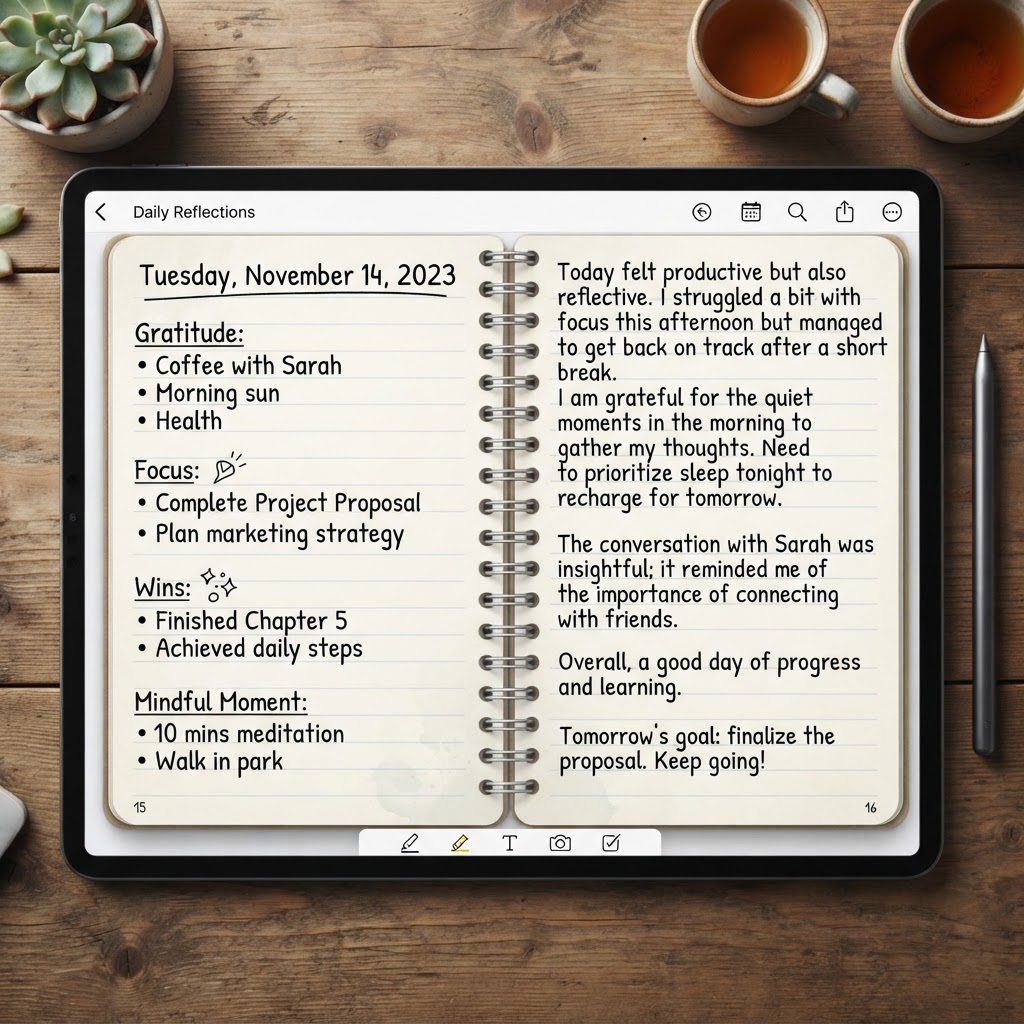
Day One has been one of the most respected dedicated journaling apps for years, with a genuinely good writing experience, rich media attachments, and (as of its 2026 Gold tier) AI features like conversational daily prompts and entry summaries. If you want the single best pure journaling app and nothing else, Day One is a serious, mature product.
PlanJour starts from a different question: most people who journal also keep a calendar somewhere else, so why are the two never in the same app? PlanJour is a notebook-style calendar with a full daily journal built in, rather than a journal-only app.
Where Day One wins
Day One's writing experience is deep and mature: up to 30 media attachments per entry on its Silver tier (photos, videos, audio, drawings, PDFs), Strava/Zapier/IFTTT integrations, PDF scanning, and on its Gold tier, AI features like Daily Chat, entry summaries and AI image generation. If journaling itself, the writing and the archive, is the whole point for you, and you do not need it connected to a calendar, Day One's depth on the writing side is hard to match.
It is also a mature, long-established app with printed-journal options and a large existing user base.
Where PlanJour is built differently
Day One has no calendar at all. It is a journal, full stop, which is exactly what it set out to be. If you also want to see what you did that day sitting right next to your reflection on how it felt, you are back to running two apps.
PlanJour's daily journal sits on the same page as your actual calendar events for that day: mood and weather stickers, a gratitude prompt, a free-write space, and a habit checklist with streak tracking, all without switching apps. The idea is that seeing your day's events right there makes it easier to actually write about the day, instead of staring at a blank page trying to remember what happened.
PlanJour also leans into a warmer, more tactile visual style: handpicked patterns and a cover you design yourself, coloured categories, and doodle-style event shapes, closer to an actual paper notebook than either a journal app or a calendar grid usually feels.
Price
Day One's Basic tier is free but limited to one device and one photo per entry. Its Silver tier is $49.99 a year, and its Gold tier (with AI features) is $74.99 a year. PlanJour's free tier includes the full calendar and 7 days of journal history, and PlanJour Plus is £4.99 a month or £34.99 a year, roughly half of Day One's Silver tier, and includes recurring events, reminders, calendar sync and PDF export alongside the journal, not just journal-only features. See the full pricing.
AI features
Day One's Gold tier leans into AI: a conversational Daily Chat, AI-generated entry summaries, and AI image generation. PlanJour does not currently offer AI journaling prompts, so if that specific feature matters most to you, Day One's Gold tier is the more direct fit today.
Which one is right for you
If journaling on its own, with deep media support and AI features, is the whole goal, Day One is a genuinely strong, mature choice. If you have been keeping your journal and your calendar in separate apps and want them to finally live in one place, styled like a notebook rather than either a spreadsheet or a plain writing app, that is exactly the gap PlanJour is built for.
Try PlanJour free and see if having the calendar right there changes how often you actually write.
Things that might help
Hand-picked by us and relevant to this article. Some are affiliate links, which means we may earn a small commission at no extra cost to you. We never use your journal, mood, habits or calendar to decide what appears here.

Audible
Affiliate linkHear something fascinating with our newest plan. Choose anything you want from our entire collection of 900,000 titles before your plan renews unused monthly selections won’t roll over to the next month.
Start Free 30 Day Trial
Skill Share
Creative Classes Taught by the Best Creative Pros. Stay Inspired Discover trending topics, get quick answers, and find your people.
Find your classKeep reading
- How do I build a bedtime journaling habit that actually survives busy weeks?Bedtime journaling is one of the first habits to drop during a busy stretch. Here's how to make it durable enough to survive one anyway.
- What's the best calendar color-coding system for someone juggling three roles (work, parent, side project)?Juggling multiple roles on one calendar gets messy fast without a deliberate color system. Here's a simple three-role setup that actually stays legible.
- How do I know if I actually need PlanJour Plus or if the free plan is enough?Not everyone needs to upgrade, and it's worth being honest about when the free plan is genuinely enough. Here's how to tell.